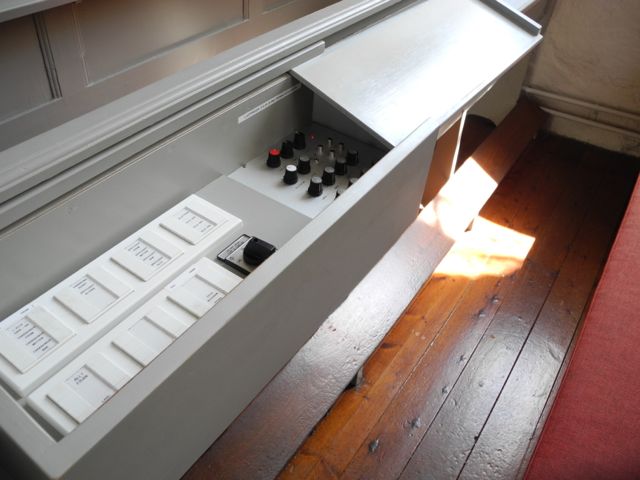
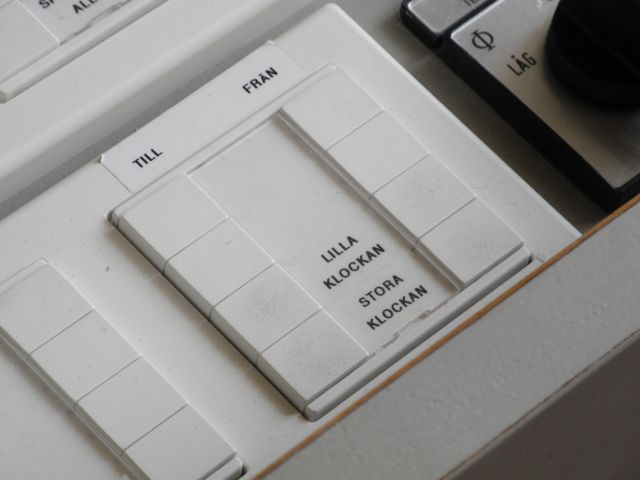
(yes, it is) 23 of May – 26 of June I’ll be one of three residents in the project Walking Peace in the Avian Kingdom in Sweden, organised by ARNA at the very spot where two pilgrim trails meet in Harlösa. Walking Peace is a green, slow and peaceful way of making new connections across cultural backgrounds and religions, creating art as a statement for peace while walking. Afterwards I'll be researching the pioneer life in Värmland.
Showing posts with label pilgrim. Show all posts

17.6.13

the centre

Next to the cathedral in Lund they built a labyrinth. The priests use it to do labyrinth walks, every morning at 7.15, sometimes in the afternoon as well. After our presentation in the Visitor Centre we were invited to join the priests in a walk. It was the second time I walked the labyrinth.

The first time, a few weeks ago, was with pilgrim priest Anna. Before she entered it, she told us how she usually walked the labyrinth. She took a stone, carried it with her while walking and with every step she thought about something she was dealing with in her life, big things and small things, trying to let them go. In the centre she would leave her stone behind and with it all her worries.

The first time I walked the labyrinth my mind stopped the moment I took my first step. I didn’t think of anything. I just walked with an empty head. Even though I tried to bring things to mind I should concentrate on, nothing entered my head. Only when I stepped into the centre my brain started working again and I wondered how long I could stay in there. The second time the same thing happened. I just put one foot in front of the other. No thoughts. Nothing to struggle with. Emptiness. Until I reached the centre. And the moment the thoughts came back, I automatically stepped out of the labyrinth.

There was a man in our company who didn’t do the walk with us. He said he was too impatient to walk slowly through a labyrinth. He sat at the bench on the side and watched us. Afterwards he said that everybody had been looking so serious and troubled. “You were the only one smiling,” he told me.

I hadn’t realised it. And his words made me sad. And the sadness made me smile again.

It isn’t that difficult to get to the centre. But staying in the middle is the most difficult thing there is. A lifetime usually isn’t long enough to learn the skill. And there is nobody who can teach you how to do it. You can only be your own teacher.

The best way to learn is to walk. And if it doesn't teach you all you want to know, at least you've been walking.

16.6.13

words

The priest asks: "Do you feel a pilgrim now?" and I don't know what to answer. Pilgrim is a word, like yes is a word and no is a word.

The same evening I watch the documentary “Patience” about W.G. Sebald’s book The Rings of Saturn for the second time. I am looking for a quote I had written down in my notebook without mentioning the source. I suspect it is from Sebald. I find out it isn’t, but it is in the documentary, it is about him.

“.... if you allow yourself to become a writer, the catastrophy will be like an avalanche, whereas if you keep walking, you might be ok.”

The quote is somewhere towards the end of the documentary. Just before it goes into the subject of pilgrimage. The Rings of Saturn, a story about a long walk, is subtitled “An English pilgrimage”. And as the narrator explains, a pilgrimage is a movement towards healing, towards resolution, towards selfunderstanding. But in the book, the narrator, Sebald himself, collapses. The walk results in catastrophy, a vanishing of stabilities.

Saturn is the melancholy planet. It represents our limitations in power and control. It intensifies feelings of isolation and sadness. Its rings were once a moon that circled closer and closer around the planet until it got too close and was ripped apart by tidal forces. Now its particles circle around the planet at an equal distance in an endless movement.

Reading Sebald always makes me realise there can be great comfort in it, when everything collapses around you. When things fall apart. When the centre cannot hold. Once, in an interview, being asked why he was still writing when at the same time his view of the world was so pessimistic, his answer was that he was trying to create very small lagoons situated out of time, to discover specific truths, in as far as that is possible. He said that trying to describe the unbearable things in such a way that they loose their heaviness, makes it possible to communicate them, to open peoples’ eyes.

One of my favorite moments in Rings of Saturn is when Sebald meets Edward who lives with his mother and sisters in an old manor house somewhere in the countryside. “Ever since leaving school in 1974, Edmund, the youngest, had been working on a fat-bellied boat a good ten yards in length, although, as he casually informed me, he knew nothing about boat-building and he had no intention of ever going to sea in his unshapely barge. It’s not going to be launched. It’s something I do. I have to have something to do.”

He makes me realise I’ve been building my own boat.

And to come back to the subject I’m dealing with here, on this blog, in this project (and this is Sebald again): It is not about reaching some sort of christian or spiritual goal but it is about “auf eine bestimmte Weise zu gehen und zu sehen”, to walk and to see things in a specific way.

Sebald chose to walk and to write but he once said that he could just as well grow cucumbers. It doesn’t matter what you do. As long as you go about it in the right way. And when you grow cucumbers at least you know you will have a crop you can show to the outside world. Something they can eat. Something they understand.

There is sadness in this thought but Sebald masters his sadness well. Like Rilke he sees how it is an inseperable part of life. It is connected to change. No change without sadness. No newness without sadness.

“For they are the moments when something new has entered into us, something unfamiliar. Our feelings become mute in timid shyness. Everything within us steps back; a silence ensues, and the something new, known to no one, stands in the center and is silent.”

Rilke wrote this in his Letters to a Young poet and I encountered them here, in Sweden, in the most Sebaldian way possible. In the middle of a walk along the pilgrim trail from the west-coast to the east-coast of Sweden I started the second day in a tiny place called Flädie. In the afternoon I collected Rilke’s book at a library where I had ordered it because I wanted to reread it. The eighth letter, the one about sadness, is written in Flädie. I had no idea.

“For it is not inertia alone that causes the unspeakably monotonous and unrenewed human condition to repeat itself again and again. It is the aversion to anything new, any unpredictable experience, which is believed untenable. Only he who can expect anything ... will have a relationship to life greater than just being alive ... when a sadness arises within you of such magmitude as you have ever experienced, or when a restlessnes so overshadows all you do ... you must believe that something is happening to you, that life has not forgotten you, that it holds you in its hand. It shall not let you fall.”

Life is a pilgrimage. But those of you who read this all down to these last lines know already. You know it doesn’t matter if your answer is a yes or a no. You know that there is no need for the question.

11.6.13

cloud harvest


we arrived at the end
the pilgrim’s church of sankt olof
they rang the church bells for us
but they weren’t real bells
it was a memory only
of church bells that had once sounded
and that made sense
i saw myself reflected in the well that has been visited by many pilgrims since the middle ages
sara reached in the water
i asked her what she was looking for
for a moment i thought she said “god” but she was actually saying “gold”
i decided to walk again tomorrow
to never stop

on our way there i saw clouds being harvested


9.6.13

Air

I changed the title of this blog from “walking peace” into “walking in circles”. That is what people do naturally. If there is no way to orientate yourselve, your feet will lead you to where you started. Scientific experiments with people walking in dense forests and in the Sahara have proven that. Furthermore, most dead hikers are found within a mile, if not 100 meters from where they got lost.

I thought I would be here to walk and think about walking. But I find myself being rushed along a pilgrim trail in order to have meetings with mainly religious people. The farther we get away from the starting point, the longer we spend in the car in order to walk, to do our walking duty, to find ourselves in a car again, being driven back to where we started off in the morning where coffee and a hot shower is waiting. Where there is a fridge with food and a soft bed in the evening.

A few times I heard somebody say how lucky we are that we can walk the pilgrim trail and at the same time have all the luxuries of a proper home. But we are not walking this pilgrim trail. We are going through the motions. And walk another pilgrim trail. The one we always walk as artists. The one from a starting point where there is nothing to the end point where there is a work of art.

The meetings are interesting. Very touching sometimes, difficult at other times. Some priests welcome us with food, some with songs, some with words, some with prayer. I try to be open to all of it, to accept what they want to offer, my challenge is in doing that. It is easy when the gift is a fish pie and fresh strawberries. A warm hug, beautiful music. It is easy when it is a discussion about the lack of openness in some people’s thinking, the political situation in Europe, the story of how somebody grew up and found something he believed in. It is easy when it is a curiosity about your story.
But I find it difficult when I’m being offered words from the Bible, when I hear the word “god” being used as if I should know what is being talked about.

“They are only words”, Sean said after he was asked to read an often used passage from the Bible starting with “The Lord is my shepherd”. Yes, they are only words but I believe in the power of words. Words are magnificent. They can be used in any possible way, to hate and to love, in equal measure. To liberate or to kill, in the blink of an eye. They puzzle me, they worry me, they make me smile. They are what keeps me sane at times. They drive me crazy at other times.
But I don’t believe in the Lord.

I am planning something. It involves a bible and me folding the pages into paper airplanes one by one, sitting in the exhibition space, trying to throw them out of the door, folding and throwing, folding and throwing, folding and throwing. Repeating myself. Words, gestures, flowing through the air, trying to find a way out.

Some people might call it an act of rebellion. But it isn't. I’d call it an act of love. It is a question trying to find an answer. It is walking my own trail in the sincerest way possible.

Here is Christian Bobin, in his beautiful book The very Lowly. A meditation on Francis of Assisi:

“The Bible is a book composed of many books, and in each one of them are many sentences, and in each one of these sentences, many stars, olives trees, and fountains, little asses and fig trees, grain fields and fish – and the wind, everywhere the wind, the mauve of the evening wind, the pink of the morning breeze, the black of the great storms. Today’s books are made of paper. Yesterday’s books were made of skin. The Bible is the only book made of air. It is a flood of ink and wind, a mad book, adrift in its meaning, as lost in its pages as the wind on supermarket parking lots, in women’s hair, in the eyes of children. A book that is impossible to hold calmly between your hands for a prudent, distant reading. It takes flight on the spot, scatters the sand of its phrases through our fingers. We take the wind in our hands and very quickly we stop. As at the beginning of a love affair, we say: I’ll stop here, I’ve found everything. I’ll stop here with the first smile, the first meeting, the first chance phrase.”

I will give the words back to the air. But I’m afraid I can’t do that until I read them first. All of them. So I will do that. And I will walk. Properly. Finally.

5.6.13

Who leaves the hearth for the open sea? What you risk reveals what you value.

The earliest pilgrims shared a cathedral for a heart. They were the temple not made with hands. The Eklasia of God. The song that carried them over the waves was the hymn that rung the rafters. Their throats were bare for God. Look at them now, heads thrown back, mouth open, alone but for the gulls that dip the prow. Against the too salt sea and the inhospitable sky, their voices made a screen of praise.
Love it was that drove them forth. Love that brought them home again. Love hardened their hands against the oar and heatened their sinews against the rain. The journeys they made were beyond common sense; who leaves the hearth for the open sea? especially without a compass, especially in winter, especially alone. What you risk reveals what you value. In the presence of love, hearth and quest become one.

Janet Winterson, Written on the body

3.6.13

sometimes you've got to stick with the ancient ways

ghost dog, jim jarmusch

Today


My GPS broke down. I couldn’t get it working when we started walking this morning. Somebody said: “Don’t worry, you will have plenty of time in the coming weeks to make this walk again and catch it on your GPS.” But we are in the middle of the Pilgrim Trail. It felt somewhat like somebody telling you after a difficult year: “Don’t worry, you will get another chance to do this one again and enjoy it.” I didn’t worry, I just put the device in my backpack and decided to put the camera in there too and enjoy the walk without gathering digital traces. I even refrained from gathering y-shaped branches. But yesterday’s question was still in my mind. Why are we here?

It was a beautiful route. I was slow and silent.

To walk and to smile.

2.6.13

y

What. I asked in my last post. What are we doing here? And who is this we?
But it was another question I carried with me while walking.
Sometimes I wonder if it is childish. If it is too literal. But maybe carrying the why’s is better than asking them. I tried to stop asking them a long time ago.

In my first year as an art student I was asking myself this question all the time. Why make this? Why do this? Why not in a different way?
After a while I realised it wasn’t about answering this question but about letting go. About putting the question aside. The question is useless once you’ve found the answer. And the question is always more interesting than the answer is. Asking it means you will start looking for the answer. Or somebody else will. Making art is always about asking questions. 
But never about answering them.

I’ve been collecting branches shaped like a “Y”. Pronounce the letter and you will know why. They have all the functions I need to fit in here. Or to not fit in here. They sound like a question. But you can also use them to find water. They can find the source, the thing we need to stay alive. A lot of the churches we pass while walking the pilgrim trail are build over a well. The well is often still there, inside the church. In the cathedral in Lund people throw money in it and make a wish. The water promises something. Life. Not necessarily a good one though. And we all know we have to be carefull what we ask for.

The y-shaped branches can also be used as catapults. And that comes in handy. Defending yourself. Attacking when necessary. With a weapon. But the question will do too. Questions are the best weapons anyway.

Why are we here?


31.5.13

Full circle


Thursday

First day. Arrival. In the evening I went out for a walk. I left the village of Harlösa behind me and followed a small trail. Big snails crossed my path. The moon was almost full. When I turned around to walk home, I saw a snail with an almost white house on his back. He must have been around for a long time. He looked as if he was carrying the moon.

Friday

Fika (which is very important in Sweden, meaning drinking coffee –or something else- with cake or cookies –or something else-) at Kirsten’s place. She tells me the snails were brought by the monks who came over in the 12th century from Premontré in France to stay in the Övedskloster, the monastery at Öved. Little is known about them and there is nothing left of the old monastery. These days there is a privately owned castle. But the big “escargots” that wander around these days are the descendants of the snails that lived there in the 12th century. People here hate them because they eat the vegetables in their gardens.

Saturday

Small walk. Lots of snails. I carry one all the way. The last kilometer we walk up hill from Harlösa to the wooden museum houses. The path is called the snail trail. I saw why.

I take the snail home. I put him in a plastic container. I wonder if he likes lettuce. My housemate Sean adds some leaves from the garden so he can have his pick.

Sunday

Rain. Snail weather.

Monday

First part of the Pilgrim Trail. The sea, the sea, the sea .......

Tuesday

Second walk. Presentation in the evening.
The first thing I did when I came home from my artist’ talk, after I had poured myself a glass of wine, was checking on the snail. I left it outside when I went to the community house at 18.00 and since it was 23.30 now, he couldn’t have moved farther away than 3,5 x 4,8 meter = 16,8 meter. In fact he only moved 50 cm. If i would be sentimental I would write now we had gotten attached to each other. Of course we haven’t. Still I was glad he hadn’t gone far.

I did some writing and went to sleep. Around 5 in the morning I woke up and realised I had forgotten to put the snail back inside. I walked into the garden to discover he had climbed back into the plastic container I kept him in. I know it was only because there was food inside, but still ......

Wednesday

I’ve been researching snails and read about the love dart. Prior to copulation, each of the two snails attempt to "shoot" one (or more) darts into the other snail. There is no organ to receive the dart; this action is more analogous to a stabbing, or to being shot with an arrow. The dart does not fly through the air to reach its target however; instead it is fired as a contact shot.

Mating always begins with a courting ritual. The two snails circle around each other for up to six hours, touching with their tentacles and biting lips and the area of the genital pore. As the snails approach mating, hydraulic pressure builds up in the blood sinus surrounding the organ housing the dart. Each snail manoeuvres to get its genital pore in the best position, close to the other snail's body. Then, when the body of one snail touches the other snail's genital pore, it triggers the firing of the dart.

Wauw.

Thursday

Last walking day for this week. I forgot my map. Too many things to do in the morning. Hurrying. Then just after we started there is a big snail on the road. Somebody says “yes, this must be the right way”.

Friday

A week has passed. Our first day off. Breathing in, breathing out. There has been a lot of rushing during the walking. There were always appointments with people we had to be in time for. Keeping the speed, keeping an eye on your watch, limited time to wander off. Lots of people to talk to. Little silence. Don’t get me wrong, it was wonderful. Meeting beautiful people, being welcomed in the warmest way possible, never ending hospitality, and being in situations that gave me new things to think about. They need to be balanced though and they were this morning when I sat in the grass and looked at how the snail slowly and silently moved in its own way, touching the grass halms with its tentacles (they carry their eyes on the upper set and smell with the lower two).

Here we are. And as my walking partner Sara told us on our last walking day: always at the right time in the right place.


28.5.13

The cathedral in Lund sounded the church bells especially for us. We were being welcomed as pilgrims. The pilgrim priest sang a hymn for us in a very touching way as she led us to the pilgrim altar. I thought: "I didn't deserve this". But maybe I have to learn to accept what is offered to me without questioning it all the time. But still.

Lots of new questions today. And there will be more tomorrow.


 I started today with Brendon LaBelle: "To step is to dream."
(from: Handbook for the Itinerant)